In this episode, Dr Michelle Livock and Monique Mitchelson do a true info-dump style breakdown of what memory actually is, how it works, and what can help when your brain does not store or retrieve information the way you want it to.
This 73-page Episode Companion Article includes:
A clean, readable transcript format for easier re-reading and sharing
Key quotes, key terms, and visual callouts
Reflection questions and journaling space
Linked resources mentioned in the episode
Episode topics include:
Four stages of memory: perceiving, encoding, retaining, and retrieving.
What can affect perceiving and encoding; the ‘front end’ of memory.
Different types of memory, including working memory, short-term memory, long-term memory, and different kinds of long-term memory.
What can affect our longer-term memory.
Learning and memory in neurodivergent brains.
The impact of hormonal changes for women and AFAB folk on memory.
Tips and strategies for supporting memory
Good for:
Neurodivergent adults who want a clear framework for why memory can feel inconsistent
Students and lifelong learners looking for practical ways to retain and retrieve information
Clinicians, educators, and support workers who want a neuro-affirming memory primer to share with clients
💡 Professionals: Add a $3 license upgrade if you want to use this resource in client work, groups, supervision, or trainings
Instant PDF download. U.S. Letter size. Printable.
In this episode, Dr Michelle Livock and Monique Mitchelson do a true info-dump style breakdown of what memory actually is, how it works, and what can help when your brain does not store or retrieve information the way you want it to.
This 73-page Episode Companion Article includes:
A clean, readable transcript format for easier re-reading and sharing
Key quotes, key terms, and visual callouts
Reflection questions and journaling space
Linked resources mentioned in the episode
Episode topics include:
Four stages of memory: perceiving, encoding, retaining, and retrieving.
What can affect perceiving and encoding; the ‘front end’ of memory.
Different types of memory, including working memory, short-term memory, long-term memory, and different kinds of long-term memory.
What can affect our longer-term memory.
Learning and memory in neurodivergent brains.
The impact of hormonal changes for women and AFAB folk on memory.
Tips and strategies for supporting memory
Good for:
Neurodivergent adults who want a clear framework for why memory can feel inconsistent
Students and lifelong learners looking for practical ways to retain and retrieve information
Clinicians, educators, and support workers who want a neuro-affirming memory primer to share with clients
💡 Professionals: Add a $3 license upgrade if you want to use this resource in client work, groups, supervision, or trainings
Instant PDF download. U.S. Letter size. Printable.
 Image 1 of 11
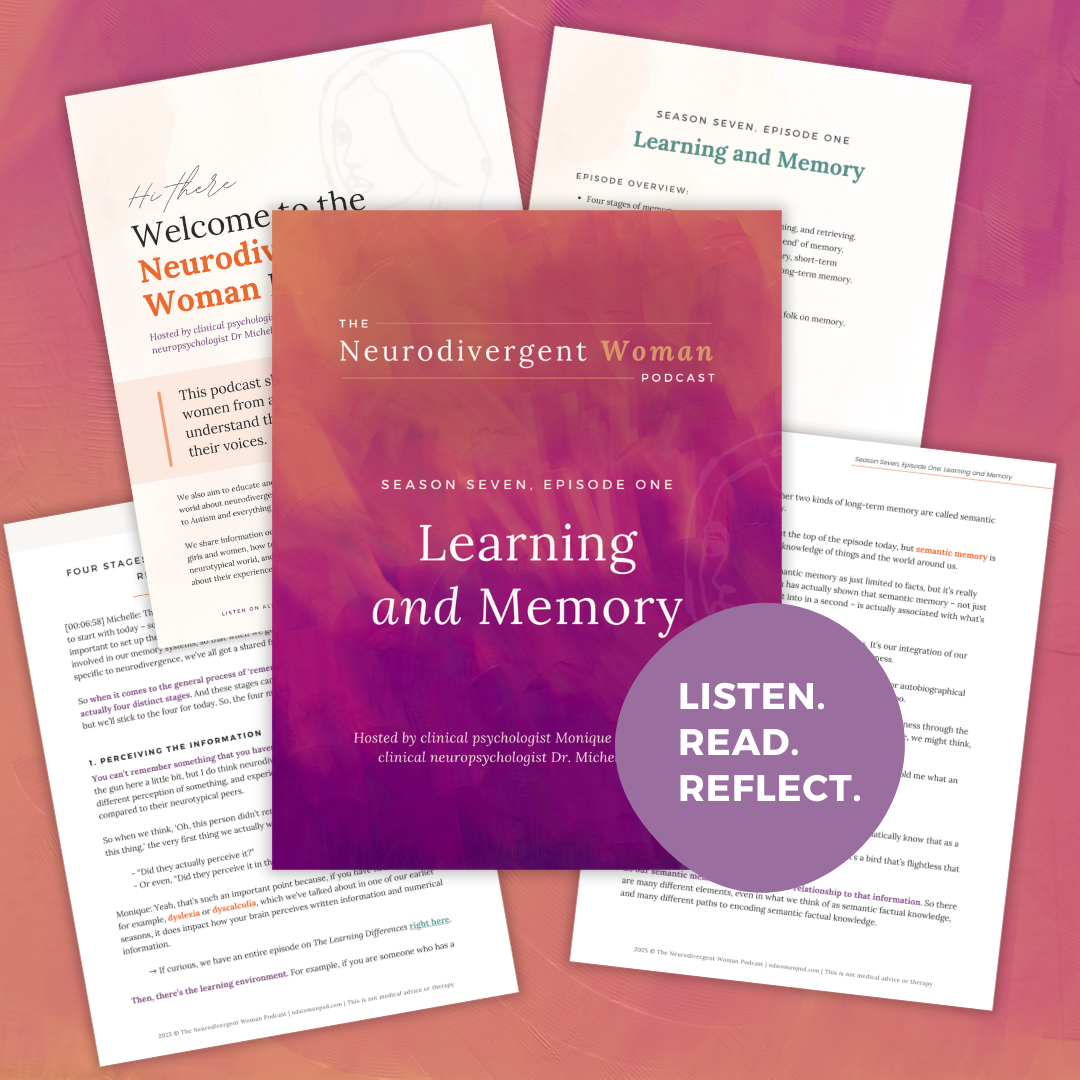 Image 2 of 11
 Image 3 of 11
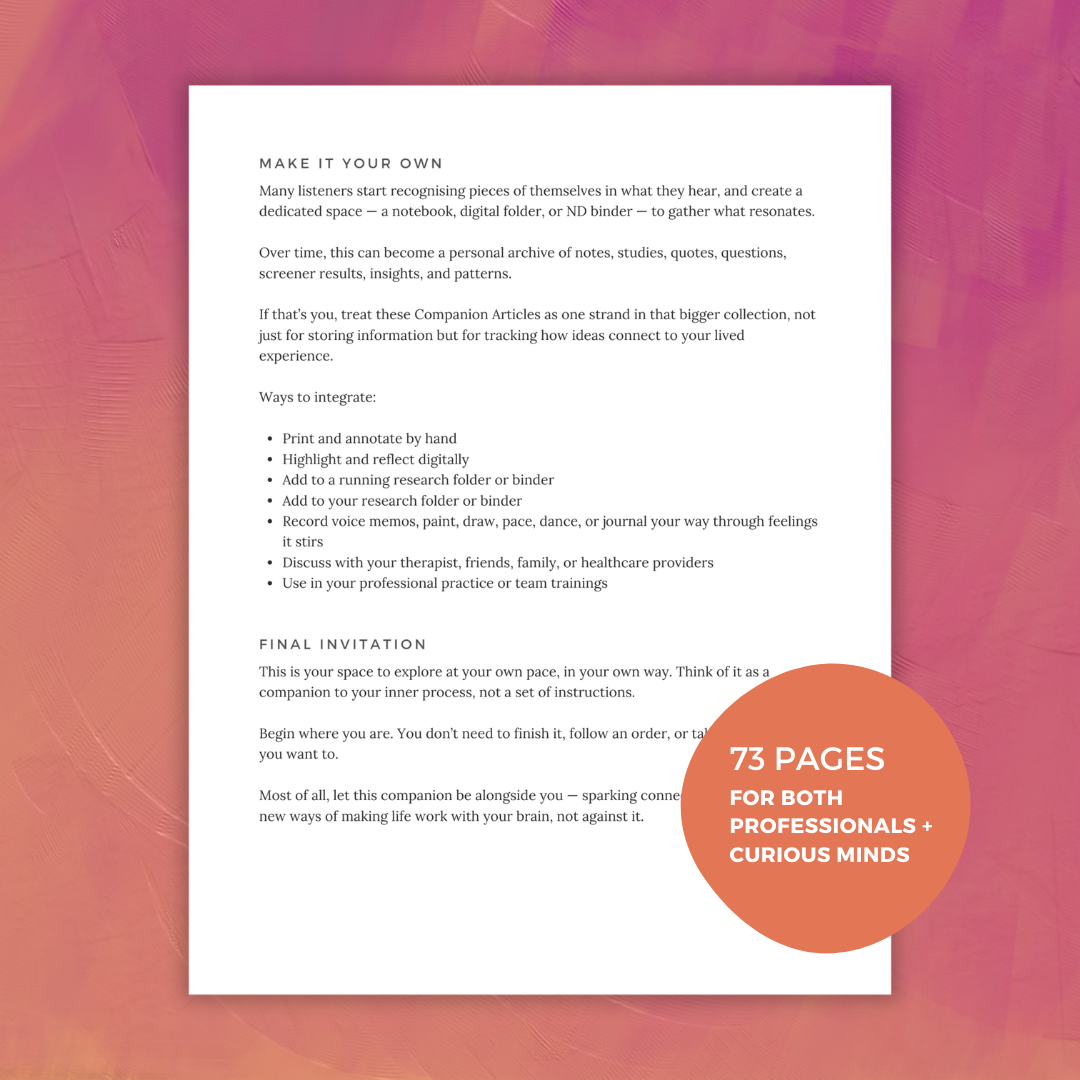 Image 4 of 11
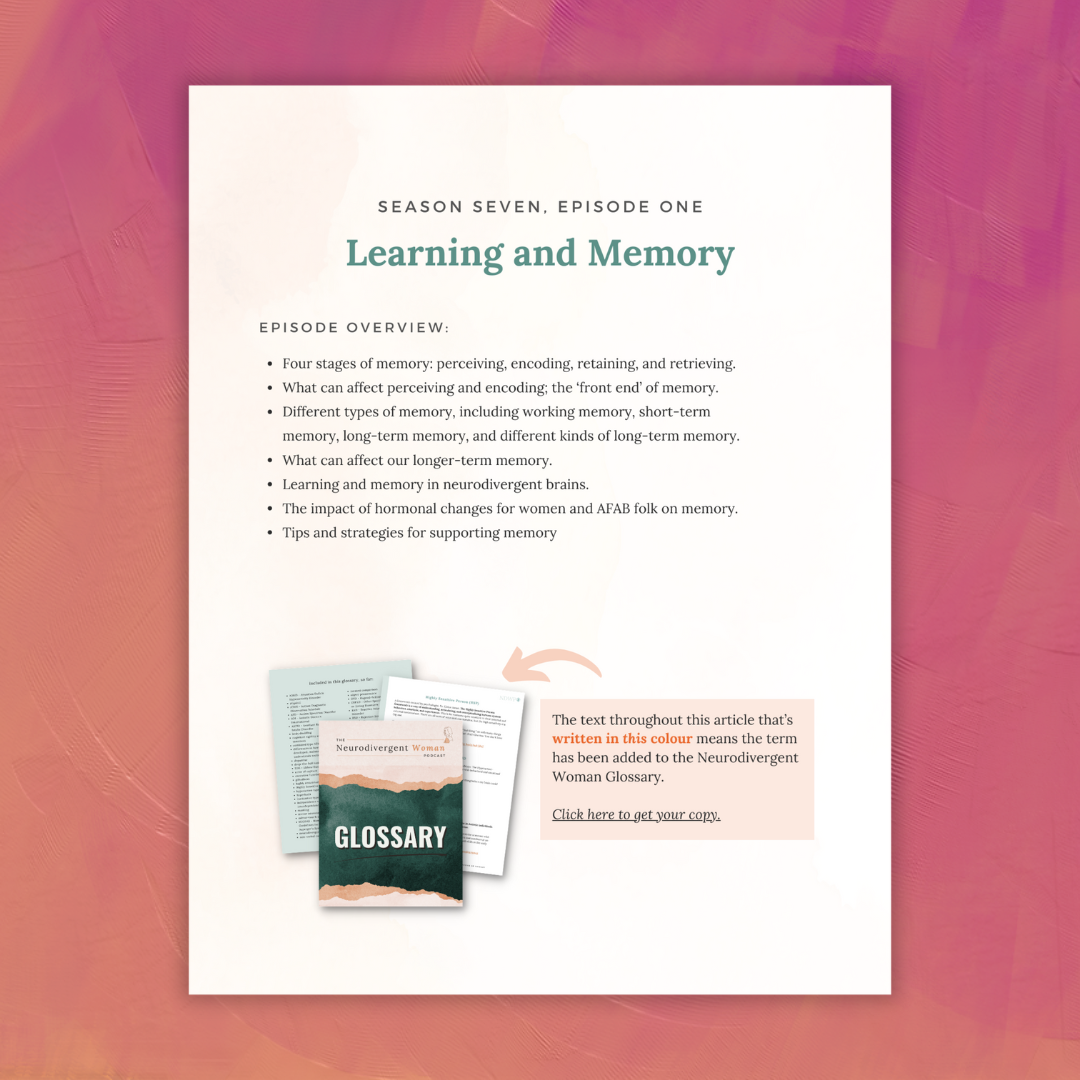 Image 5 of 11
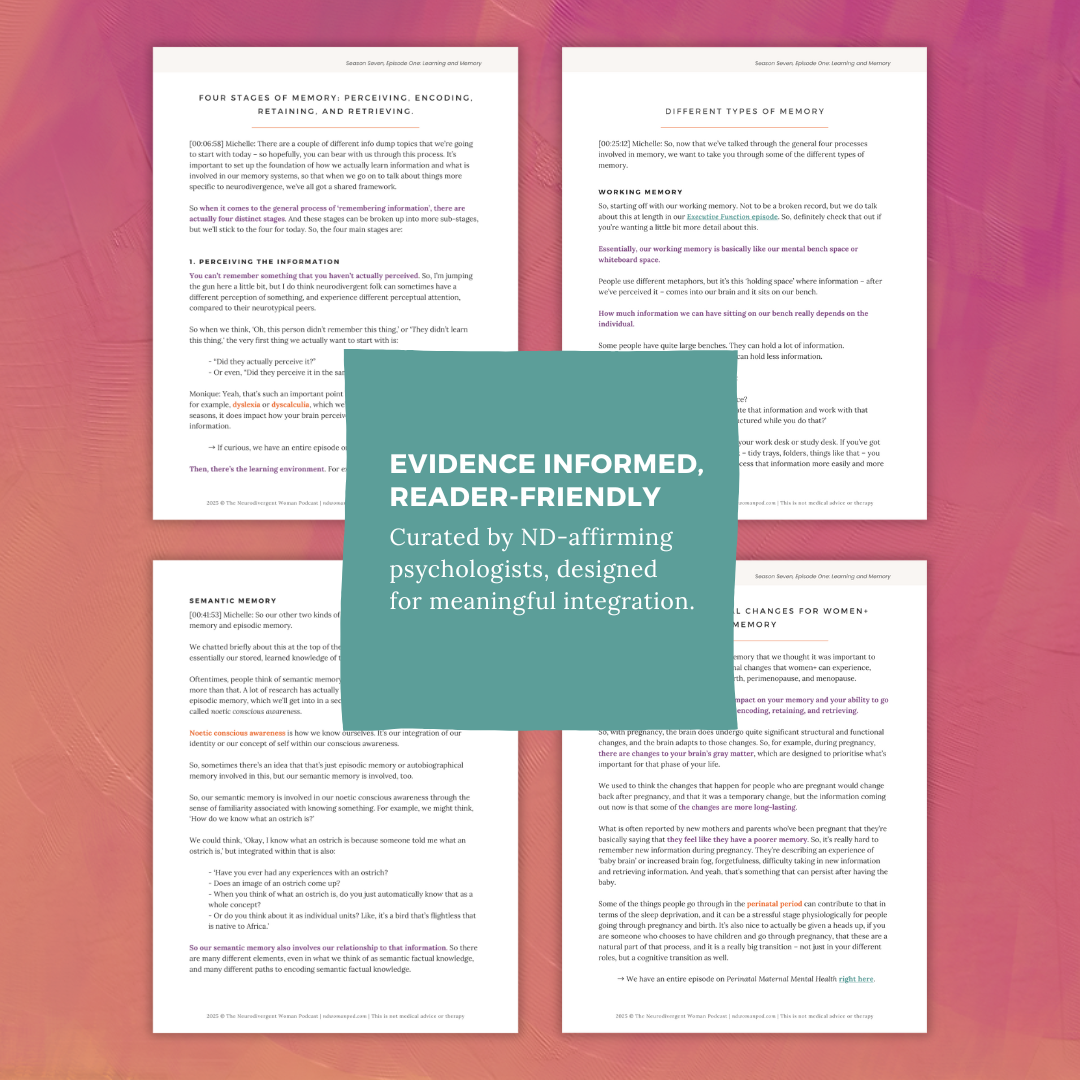 Image 6 of 11
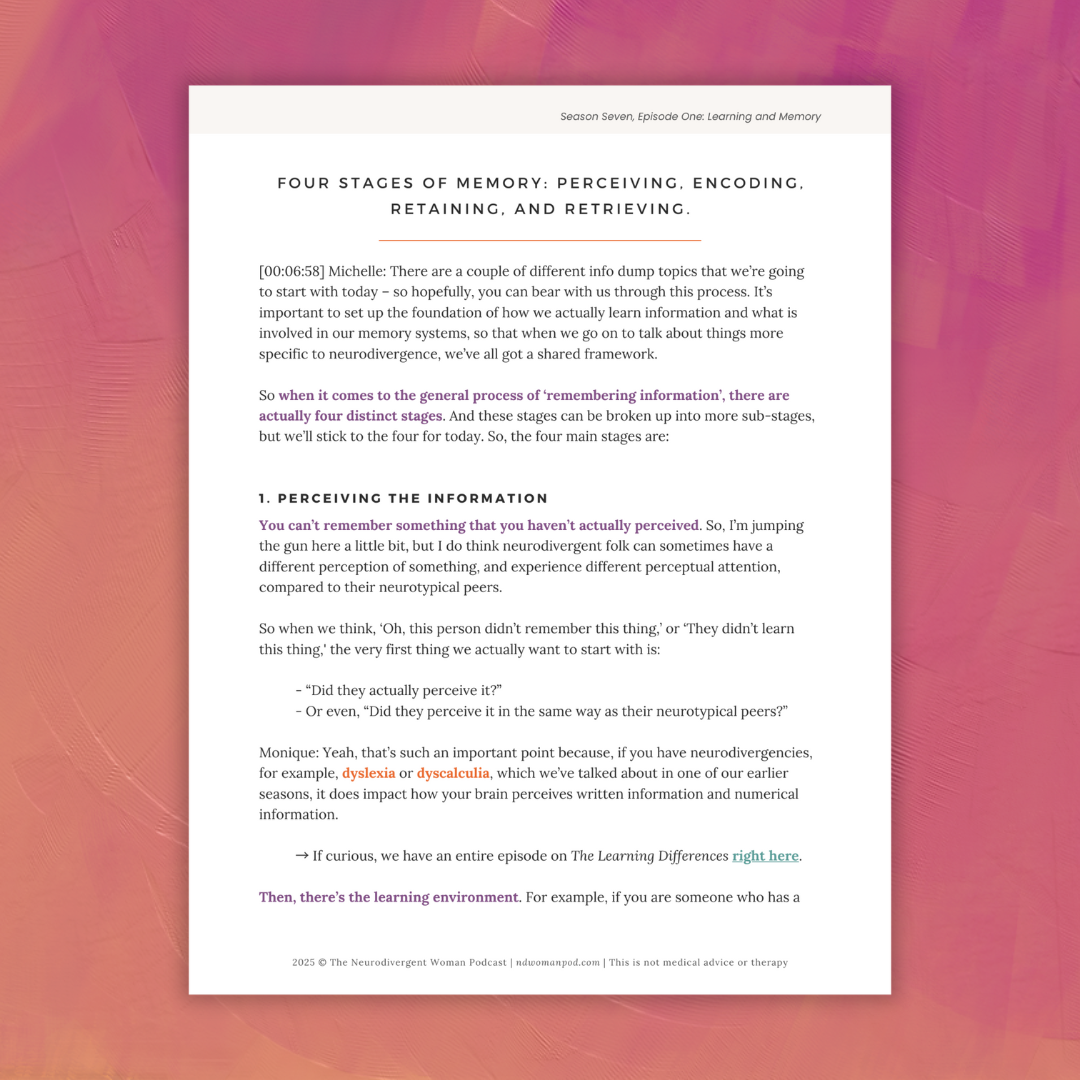 Image 7 of 11
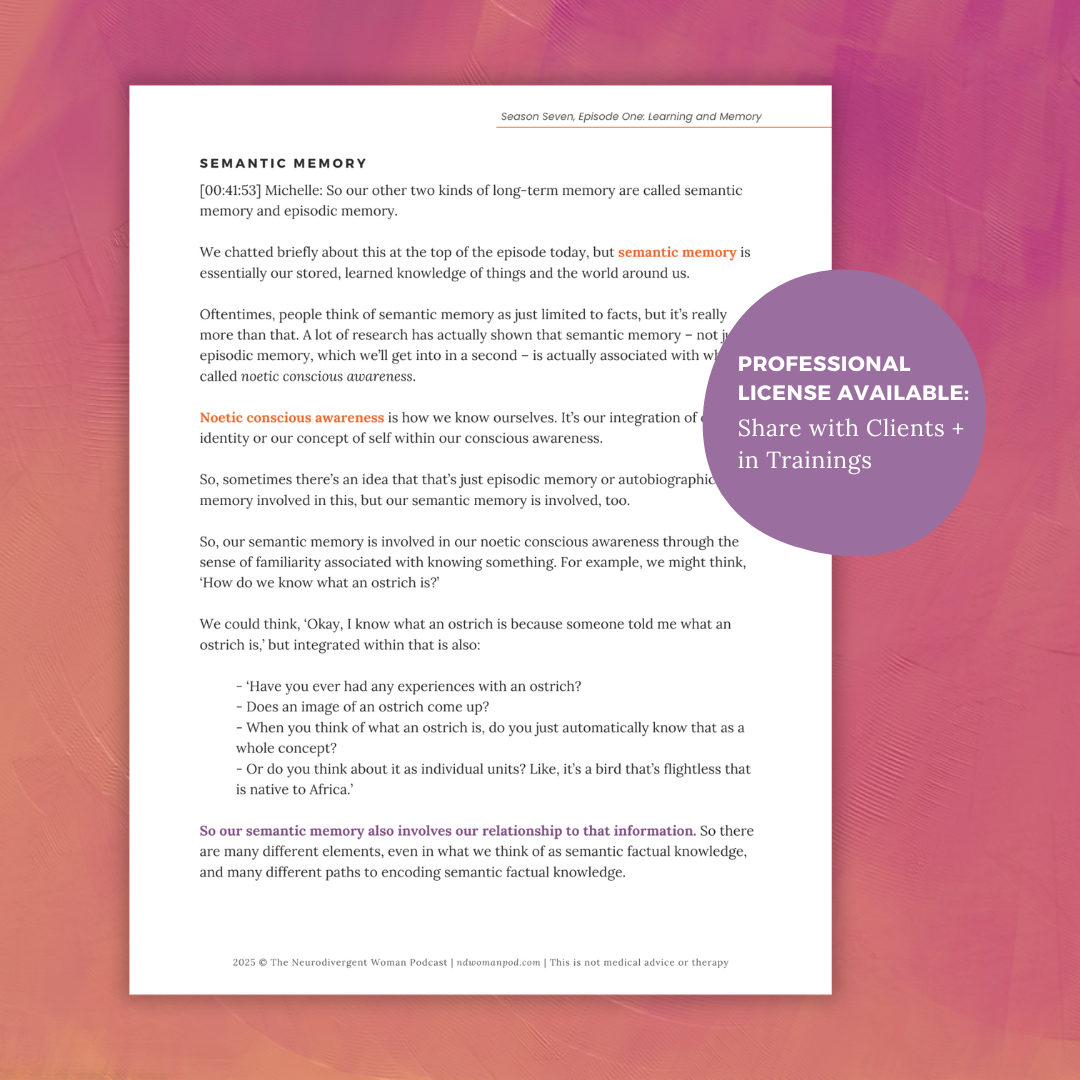 Image 8 of 11
 Image 9 of 11
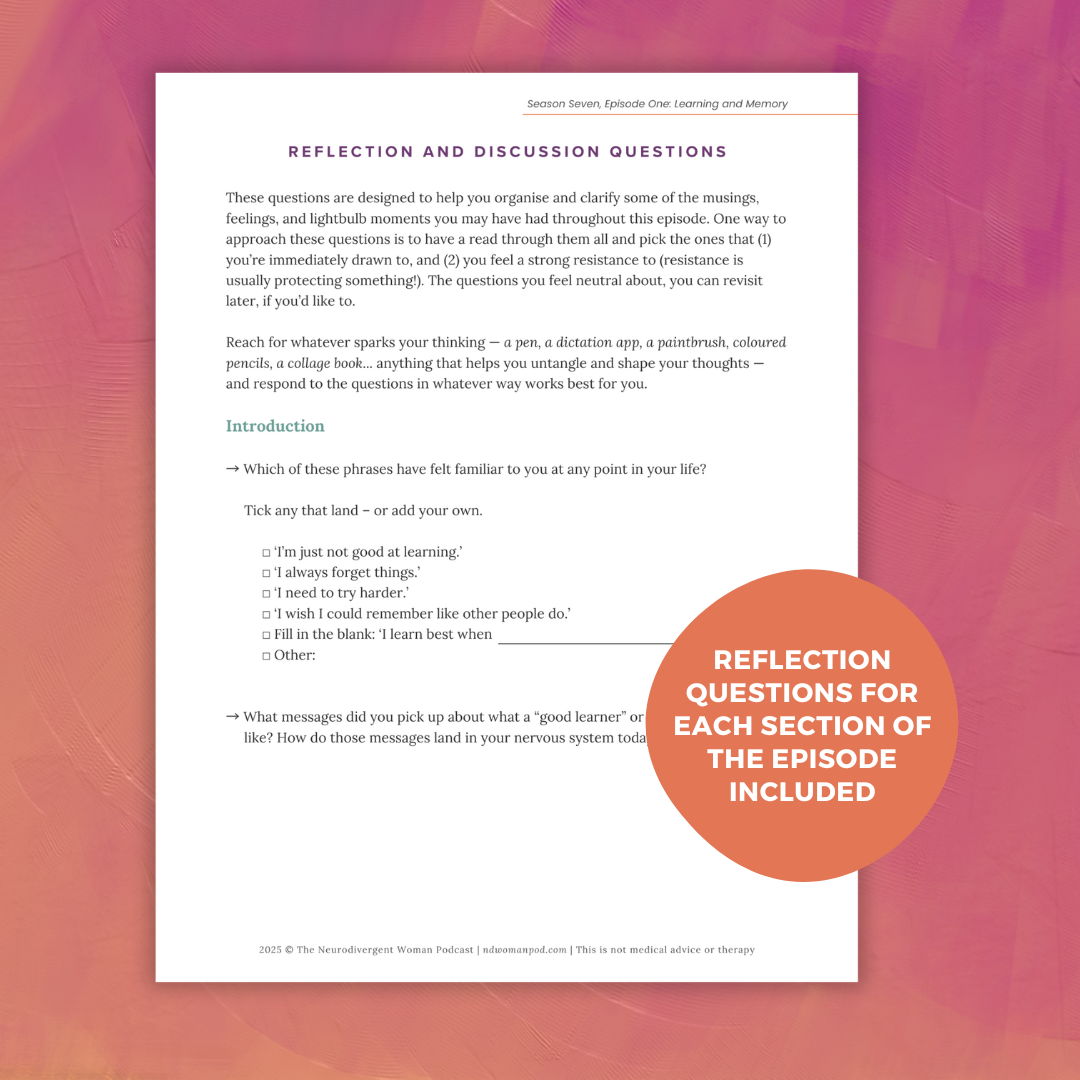 Image 10 of 11
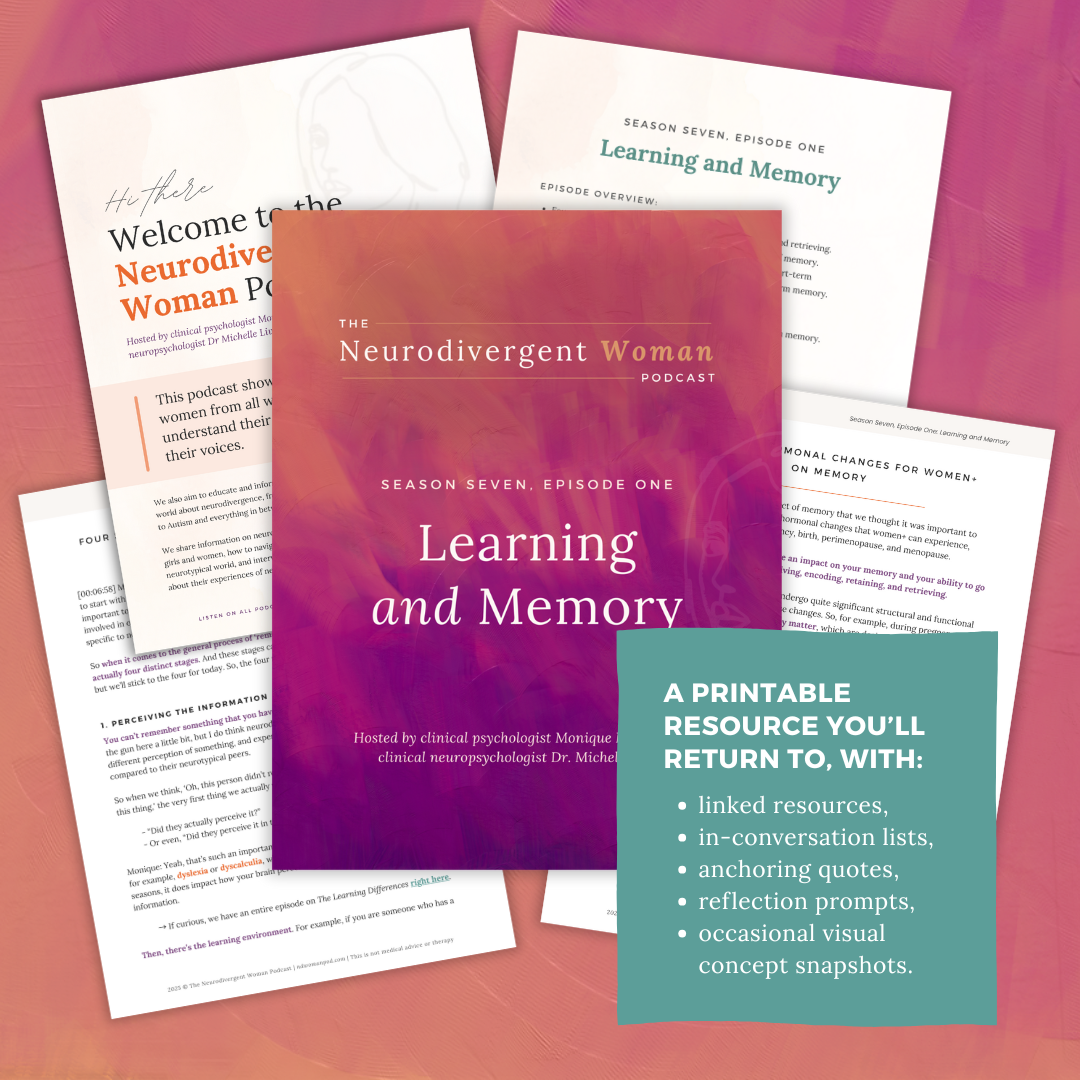 Image 11 of 11